Finding Connection and Building Community in Public Health
By Sammie Garrity | November 14th, 2025
When Melissa Her first stepped onto the UW–Madison campus, the idea of becoming a public health nurse was foreign to her, much less one defined by community engagement and service.
She chose UW–Madison to stay close to her sister, but quickly struggled to find community and connection.
“I found it really hard to make connections that first year,” she says. “I was working a lot and not really in any clubs.”
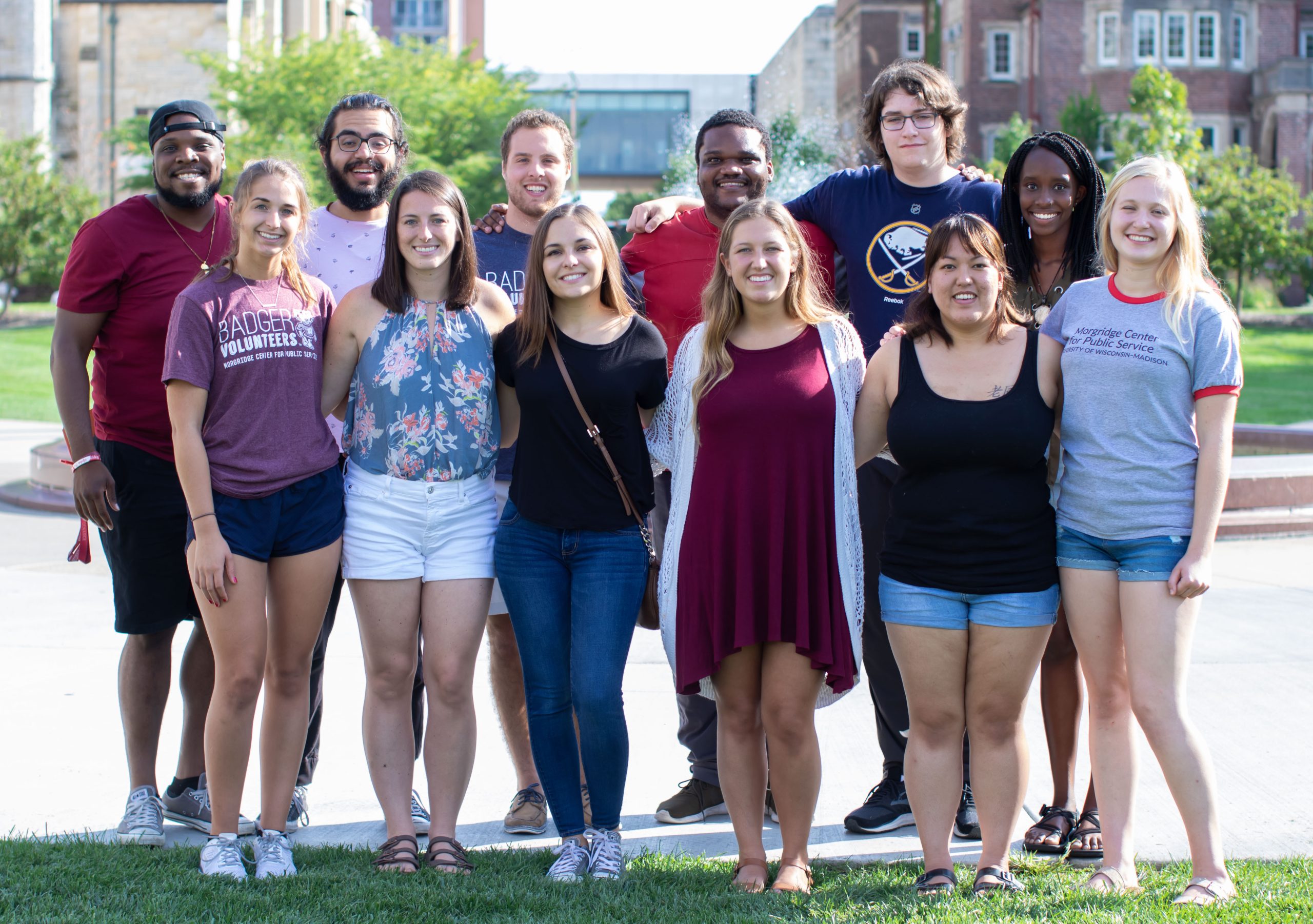
This changed when she stumbled upon the Morgridge Center for Public Service, specifically its Badger Volunteers (BV) program.

“That second year is where I started Badger Volunteers, and then from that point on, I was very involved in the program itself, both as a volunteer and working for the Morgridge Center,” she says.
Now, almost five years later, Her is a public health nurse in the Sexual and Reproductive Health Program at Public Health Madison & Dane County. Her work is grounded in equitable access and educational outreach, rooted in her former work as a Badger Volunteer.
“I would say a lot of the work that I did as a BV intern is very similar to the work I’m doing now,” she says. “Especially the coordination of education for community members.”
Her’s journey into public health wasn’t straightforward, however. During her time in nursing school, she struggled to figure out whether it was the right path for her. She wanted to do community-rooted work and preventative care, and realized that hospitals were not the best place to do that.
“I was three years in and worried that I had chosen the wrong career path,” she says.
This all changed when she had her public health rotation and began spending more time at the Morgridge Center, shaping how she perceived service and community.
One of the most formative experiences she took away from the center was the approach to reciprocal relationships, where service isn’t about imposing a presence or agenda on another entity; it’s about engaging with them as a partnership.
She reflected on a presentation by Reuben Sanon, a former Badger Volunteers coordinator, about reciprocal service.
“He had done a presentation on asset-based community thinking, rather than a deficit-based community thinking,” she says. “Those are things that I didn’t really learn in nursing school and only briefly touched on at public health school.”
Now, her career is centered around establishing community and partnering with local organizations. These partnerships shape the services and programs offered, guided by the insights of those who “know the community best.”
Her’s work is very versatile and spans many different sectors in the public health space.
“Pretty much all the services that we offer at our in-house clinic, I take those services and try to bring them out into the community,” she says.
This includes everything from free STI testing, pregnancy testing and counseling, to birth control services, vaccines and educational programming. Her team works to provide care to those with limited access to healthcare.
She also does a lot of work with reproductive health education across the Dane County area, holding perimenopause sessions and broadening programs beyond. Throughout this work, she sees many people not getting the care they need because of stigma.
“It can be really uncomfortable for people to talk about their experiences,” she says. “Creative approaches like trivia games, discreet supply kits and community tabling help to ease that discomfort.”
Her work also aligns with Dane County’s health equity initiatives, “to support sexual and reproductive wellness through relationship building and accessible, non-judgmental services to prioritize equity and community trust.” Her team performs equity reviews, surveying the community services and integrating that input into the structure of their programs.
This approach to service has remained the same since her time at the Morgridge Center, just growing and evolving alongside her. Before immersing herself in the center’s mission, she says that volunteering felt more focused on personal growth, but the center provided a learning experience grounded in a reciprocal service framework.
She carries this into her daily work, ensuring she listens first and addresses the true barriers people face, whether that be giving out food vouchers or assisting with transportation services.
“The Morgridge Center and its definition of public service has been ingrained in me, and I’ve only grown with that,” she says.
For students who want to pursue a career that combines community service and engagement with health care, Her encourages people to approach it with an open mind and exploratory attitude.
During nursing school, she says acute care is pushed really hard, and it took her a long time to realize that it isn’t the only option.
“There’s so much flexibility in what you can do with your nursing career,” she says. “Especially in the public health sector, you can really find ways to connect with people and do rewarding community work.”