Threads of Change: Jordyn Czyzewski and the Rise of ReWear It Wisco
Some of Jordyn Czyzewski’s favorite childhood outfits came from her cousin’s hand-me-downs. So when she learned about ReWear It Wisco her freshman year, Czyzewski fell in love. 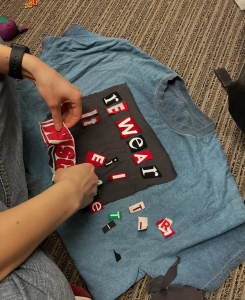 A relatively new student organization on the UW–Madison campus beginning in the spring of 2021, ReWear It was built upon the principles of promoting conscious clothing consumption and helping members craft an overall sustainable lifestyle. Growing up in Milwaukee, Czyzewski noticed a lot of disparities in land use and urban planning, so much so that she wanted to chase these questions of equity and involvement in environmental justice as she began her college journey.
“When I first heard about ReWear It and the clothing swaps that we did as freeways for students to get involved, swap clothes and have their wardrobe while eliminating waste,” Czyzewski explains. “I just thought it was such a cool opportunity.”
For the first few years of ReWear It, its members worked out of a closet in the School of Human Ecology (SoHe), without a permanent office. All of the clothing bins for the biweekly swaps were held within the apartments of the executive board and shuffled around using members’ vehicles.
In 2023 the organization gained a space in the Student Activity Center (SAC), which changed the trajectory of the entire organization.
Three years later, Czyzewski has held multiple executive positions within the organization, including the director of member relations and community engagement, and she will transition into the role of president for the 2025-26 academic year. As a longtime member of the program, she shared that sometimes the idea of sustainability can be overwhelming, but it’s about finding the ways you can easily implement it into your own life that make it simple.
“Sustainability—when you first hear it—it’s so broad and there’s so many different things that it can mean and encompass,” Czyzewski shares. “So I feel like for myself and a lot of students that I’ve talked with, it’s just challenging to even know where to start.”
A relatively new student organization on the UW–Madison campus beginning in the spring of 2021, ReWear It was built upon the principles of promoting conscious clothing consumption and helping members craft an overall sustainable lifestyle. Growing up in Milwaukee, Czyzewski noticed a lot of disparities in land use and urban planning, so much so that she wanted to chase these questions of equity and involvement in environmental justice as she began her college journey.
“When I first heard about ReWear It and the clothing swaps that we did as freeways for students to get involved, swap clothes and have their wardrobe while eliminating waste,” Czyzewski explains. “I just thought it was such a cool opportunity.”
For the first few years of ReWear It, its members worked out of a closet in the School of Human Ecology (SoHe), without a permanent office. All of the clothing bins for the biweekly swaps were held within the apartments of the executive board and shuffled around using members’ vehicles.
In 2023 the organization gained a space in the Student Activity Center (SAC), which changed the trajectory of the entire organization.
Three years later, Czyzewski has held multiple executive positions within the organization, including the director of member relations and community engagement, and she will transition into the role of president for the 2025-26 academic year. As a longtime member of the program, she shared that sometimes the idea of sustainability can be overwhelming, but it’s about finding the ways you can easily implement it into your own life that make it simple.
“Sustainability—when you first hear it—it’s so broad and there’s so many different things that it can mean and encompass,” Czyzewski shares. “So I feel like for myself and a lot of students that I’ve talked with, it’s just challenging to even know where to start.”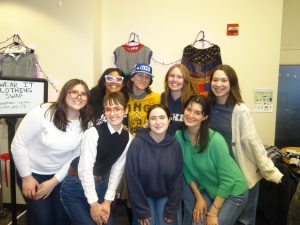 ReWear It prides itself on giving members a variety of ways to practice sustainability that can be personally meaningful. Club meetings include workshops surrounding alterations and upcycling, informational meetings with guest speakers to discuss issues like textile waste and consumption patterns and field trips to local donation bin locations to see just how crucial its mission is.
Through their partnership with the Morgridge Center’s Student Organization Partnership Program (SOPP), ReWear It was able to coordinate a visit to tour the St. Vincent de Paul Central Processing Center in Madison. This location takes all of the leftover donations from every St. Vincent location and sorts through them, very similar operations to ReWear It’s clothing swaps, but on a much larger scale.
“Without having the support from the SOPP program that event wouldn’t have been possible,” Czyzewski shares. “The end goal of the visit is to educate members about what the cycle of fashion waste looks like within our Madison community.”
Czyzewski shares that clothing swaps have become the cornerstone of ReWear It. They not only allow people to expand their wardrobe, but also place focus on conscious consumerism and provide education on the effects of sustainability choices.
As swaps began to grow in popularity, ReWear It was forced to put a ten-item donation limit into place. Czyzewski explained that while this rule was mostly to combat the overflow of leftover clothing at the end of a swap, it also forced people to question why they wanted to get rid of so many things.
ReWear It prides itself on giving members a variety of ways to practice sustainability that can be personally meaningful. Club meetings include workshops surrounding alterations and upcycling, informational meetings with guest speakers to discuss issues like textile waste and consumption patterns and field trips to local donation bin locations to see just how crucial its mission is.
Through their partnership with the Morgridge Center’s Student Organization Partnership Program (SOPP), ReWear It was able to coordinate a visit to tour the St. Vincent de Paul Central Processing Center in Madison. This location takes all of the leftover donations from every St. Vincent location and sorts through them, very similar operations to ReWear It’s clothing swaps, but on a much larger scale.
“Without having the support from the SOPP program that event wouldn’t have been possible,” Czyzewski shares. “The end goal of the visit is to educate members about what the cycle of fashion waste looks like within our Madison community.”
Czyzewski shares that clothing swaps have become the cornerstone of ReWear It. They not only allow people to expand their wardrobe, but also place focus on conscious consumerism and provide education on the effects of sustainability choices.
As swaps began to grow in popularity, ReWear It was forced to put a ten-item donation limit into place. Czyzewski explained that while this rule was mostly to combat the overflow of leftover clothing at the end of a swap, it also forced people to question why they wanted to get rid of so many things.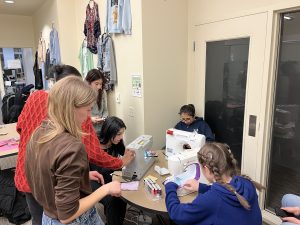 The thought process Czyewski questions is, “Okay, I have 10 items to give away. I can’t give more than 10 this week and just start to think more about, do I need to have this many items of clothing?”
ReWear It hopes to continue expanding its community engagement efforts as the organization ages. In the future, they plan to broaden their reach outside of the campus to reach other members of the community. The first step toward this goal involved a recent swap at the Madison Public Library that brought people in from all over Madison. These outside partnerships are a priority for Czyzewski as she enters into her new leadership role, as well as exploring the possibility of expanding ReWear It’s influence to outside goods beyond clothing.
“I think that sustainability and community engagement are so intertwined that, I can’t imagine how you can have sustainability without the community engagement side of things, too,” says Czyzewski.
The thought process Czyewski questions is, “Okay, I have 10 items to give away. I can’t give more than 10 this week and just start to think more about, do I need to have this many items of clothing?”
ReWear It hopes to continue expanding its community engagement efforts as the organization ages. In the future, they plan to broaden their reach outside of the campus to reach other members of the community. The first step toward this goal involved a recent swap at the Madison Public Library that brought people in from all over Madison. These outside partnerships are a priority for Czyzewski as she enters into her new leadership role, as well as exploring the possibility of expanding ReWear It’s influence to outside goods beyond clothing.
“I think that sustainability and community engagement are so intertwined that, I can’t imagine how you can have sustainability without the community engagement side of things, too,” says Czyzewski.
A relatively new student organization on the UW–Madison campus beginning in the spring of 2021, ReWear It was built upon the principles of promoting conscious clothing consumption and helping members craft an overall sustainable lifestyle. Growing up in Milwaukee, Czyzewski noticed a lot of disparities in land use and urban planning, so much so that she wanted to chase these questions of equity and involvement in environmental justice as she began her college journey.
“When I first heard about ReWear It and the clothing swaps that we did as freeways for students to get involved, swap clothes and have their wardrobe while eliminating waste,” Czyzewski explains. “I just thought it was such a cool opportunity.”
For the first few years of ReWear It, its members worked out of a closet in the School of Human Ecology (SoHe), without a permanent office. All of the clothing bins for the biweekly swaps were held within the apartments of the executive board and shuffled around using members’ vehicles.
In 2023 the organization gained a space in the Student Activity Center (SAC), which changed the trajectory of the entire organization.
Three years later, Czyzewski has held multiple executive positions within the organization, including the director of member relations and community engagement, and she will transition into the role of president for the 2025-26 academic year. As a longtime member of the program, she shared that sometimes the idea of sustainability can be overwhelming, but it’s about finding the ways you can easily implement it into your own life that make it simple.
“Sustainability—when you first hear it—it’s so broad and there’s so many different things that it can mean and encompass,” Czyzewski shares. “So I feel like for myself and a lot of students that I’ve talked with, it’s just challenging to even know where to start.”
ReWear It prides itself on giving members a variety of ways to practice sustainability that can be personally meaningful. Club meetings include workshops surrounding alterations and upcycling, informational meetings with guest speakers to discuss issues like textile waste and consumption patterns and field trips to local donation bin locations to see just how crucial its mission is.
Through their partnership with the Morgridge Center’s Student Organization Partnership Program (SOPP), ReWear It was able to coordinate a visit to tour the St. Vincent de Paul Central Processing Center in Madison. This location takes all of the leftover donations from every St. Vincent location and sorts through them, very similar operations to ReWear It’s clothing swaps, but on a much larger scale.
“Without having the support from the SOPP program that event wouldn’t have been possible,” Czyzewski shares. “The end goal of the visit is to educate members about what the cycle of fashion waste looks like within our Madison community.”
Czyzewski shares that clothing swaps have become the cornerstone of ReWear It. They not only allow people to expand their wardrobe, but also place focus on conscious consumerism and provide education on the effects of sustainability choices.
As swaps began to grow in popularity, ReWear It was forced to put a ten-item donation limit into place. Czyzewski explained that while this rule was mostly to combat the overflow of leftover clothing at the end of a swap, it also forced people to question why they wanted to get rid of so many things.
The thought process Czyewski questions is, “Okay, I have 10 items to give away. I can’t give more than 10 this week and just start to think more about, do I need to have this many items of clothing?”
ReWear It hopes to continue expanding its community engagement efforts as the organization ages. In the future, they plan to broaden their reach outside of the campus to reach other members of the community. The first step toward this goal involved a recent swap at the Madison Public Library that brought people in from all over Madison. These outside partnerships are a priority for Czyzewski as she enters into her new leadership role, as well as exploring the possibility of expanding ReWear It’s influence to outside goods beyond clothing.
“I think that sustainability and community engagement are so intertwined that, I can’t imagine how you can have sustainability without the community engagement side of things, too,” says Czyzewski.