Building Belonging: A Transfer Student’s Journey Through Service at UW–Madison
By Sammie Garrity | October 20, 2025
When Colm Fitzsimmons first drove onto the University of Wisconsin–Madison campus, it felt like uncertain territory. He ended up making a wrong turn and found himself right behind the statue of Abe Lincoln at the top of Bascom Hill.
Luckily, it was January so nobody was around to witness the blunder, but that moment captured the mix of curiosity and uncertainty that defined his transfer experience.
Before Madison, Fitzsimmons spent his first year at Luther College, a small college in Iowa. Both of his parents had attended similar style schools and loved it, and he liked the idea of pursuing music through scholarship.
Once he got there, though, he quickly felt like there was something missing.
“I didn’t feel like I was getting the opportunities I would get from a larger institution,” he says.
His decision to transfer to UW began when he discovered the data science major included an “Ethics in Algorithms” course. He was intrigued by the potential to take rigid technology and blend it with the idea of impact.
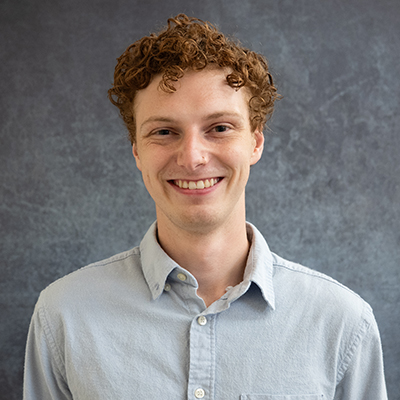
He ended up transferring in spring 2021, without having stepped foot on campus. This also was in the middle of the COVID-19 pandemic so all classes, advising and orientation events were held on Zoom.
Adjusting to Life on Campus
He recalled it was difficult to find his way at first. He didn’t really know any other people and the school itself felt isolating. It was also a major shift going from a 2,000-person student body to one with more than 40,000.
“I definitely felt like a little fish in a big sea,” he says.
As in-person life returned to campus that fall, things started to turn for him. He got a job at The Sett as a rock climbing instructor, finding a strong sense of community in a shared interest.
“That’s really where it felt like there are all these different people coming from all these different places, but we are all here, and we’re all at this little rock wall, and we found this community,” he says.
Through this outlet, he found connection in shared effort and discovered how to make a large campus feel like home.
“I’m not great at socializing just for the sake of it,” he says. “But if we’re working on a route together or volunteering, that’s how I connect with people.”
During his original transfer, he declared as a data science major but after spending a year and a half in school, decided to take off another year and half to join AmeriCorps.
“I felt very out of sorts with the degree path that I was taking. I was taking linear algebra, not being stoked about where my life was going” he says. “I need to be with people and have my work be grounded.”
During his time off of school, he worked with AmeriCorps through a program called Achievement Connections where he got to tutor students in math and serve as an overall mentor in their lives.
This experience was what actually prompted him to go back to school at UW and fundamentally changed how he perceived education and himself. When he returned to campus, he added on a community and organizational development major, focusing on nonprofit leadership.
“I’m trying to make service more efficient,” he says. “Especially for the people already drowning in work.”
This new track, combined with data science combines his passion for service and community and the ability to track metrics to make sure that there is a measurable result from that service.
Exploring a Career in Public Service
Today, Fitzsimmons works at the Morgridge Center for Public Service as the Americorps Achievement Connections Campus Recruiter, coordinating tutoring and mentorship programs to connect UW students with Madison-area public schools.
He noted how his work at the center has illuminated the importance of bridging the divide between the university and the community as a whole.
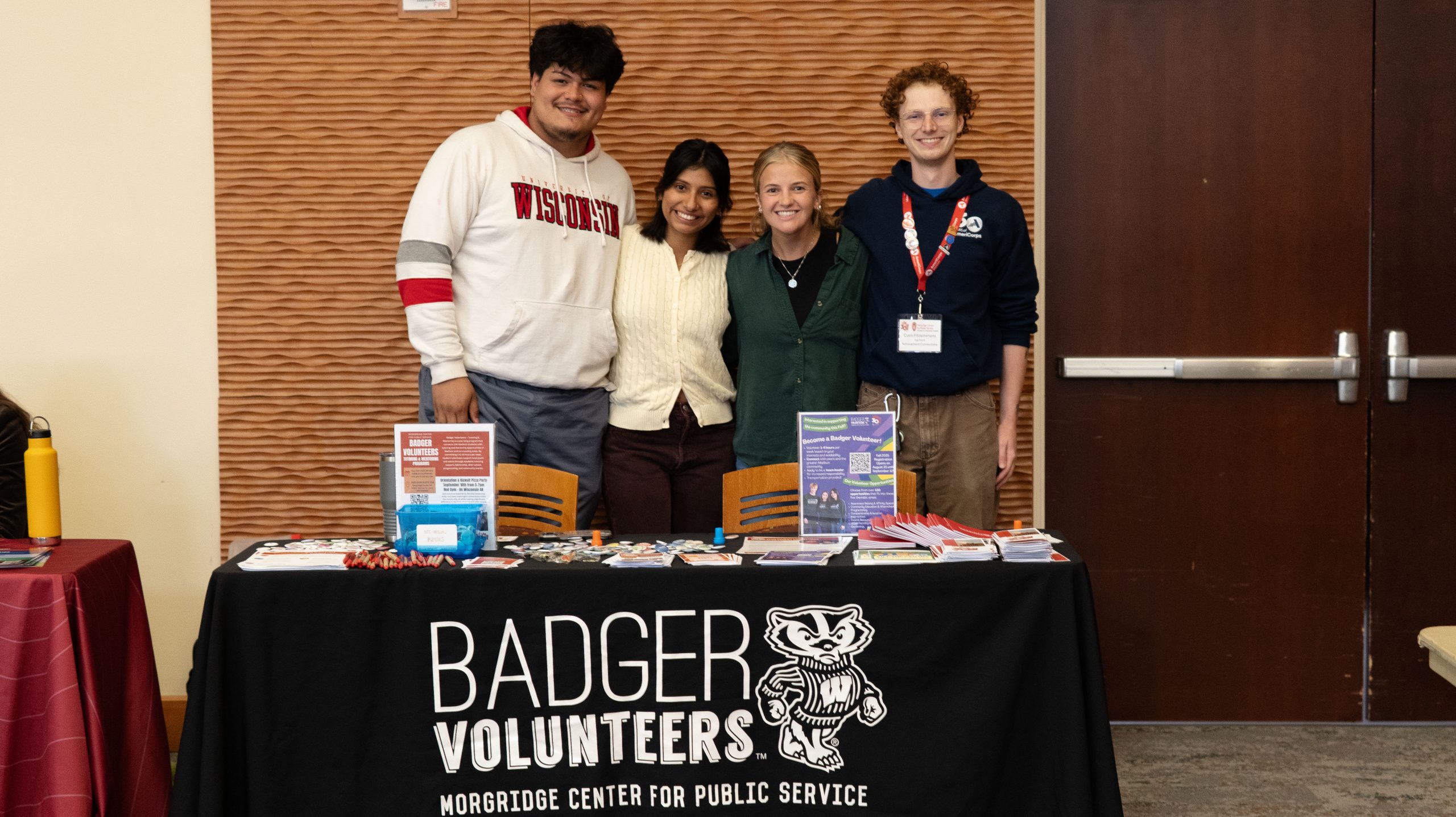
“So many students spend four years here and never really leave campus,” he says. “But once you start engaging with the community, Madison becomes smaller and more connected.”
One of the biggest takeaways from his tumultuous educational journey has been learning how to use resources and ask for help.
“The story of my life the past five years has been learning how to find and use resources,” he says. “Once I learned how to do that, everything started to make sense.”
Throughout his transfer processes he worked hand-in-hand with UW’s Transfer Transition Program which helped him find stability on campus.
“They were awesome,” he says. “Their whole job is to make sure you feel welcome and they mean it.”
As he approaches graduation, he reflected on how much he has grown since that first wrong turn onto Bascom Hill.
“I was lost then,” he says. “But that’s kind of how finding your place works here. You get lost a few times and then one day, you realize you’ve found your own way.”
Post-grad he wants to continue his work in community development and nonprofits, cherishing the idea of doing something new every day.
“The biggest thing I’ve learned is to advocate for yourself,” he says. “Know what you need and don’t be afraid to ask. UW is huge, but there are so many people who genuinely want to help. You just have to reach out.”