UW–Madison Students Help Local Law Clinic Make Legal Aid More Accessible
By Michael Dougherty l November 4, 2026
In 2024, Sara McKinnon, a volunteer with the Community Immigration Law Center (CILC) in Madison, was assisting people with their asylum application forms. During her shift, McKinnon chatted with a staff member who said the center was having trouble maintaining consistent Spanish-speaking volunteers—a challenge for a nonprofit that relies heavily on them.
McKinnon, an expert in U.S. immigration and refugee policy and law, has researched various aspects of immigration courts for years. To help address CILC’s needs for consistent volunteers, she proposed an idea to the center’s staff that would help connect UW resources to CILC, less than two miles east of campus.
“We were thinking, ‘wow, wouldn’t it be really interesting to find a way to engage the university more and meet this need?’” says McKinnon.
CILC, which employs eight attorneys and six paralegals, is the only nonprofit legal clinic in Wisconsin that provides representation for immigrants in Immigration Court. Because of the spike in demand for affordable immigration representation in Wisconsin, CILC relies on volunteers to help support its professional legal staff.
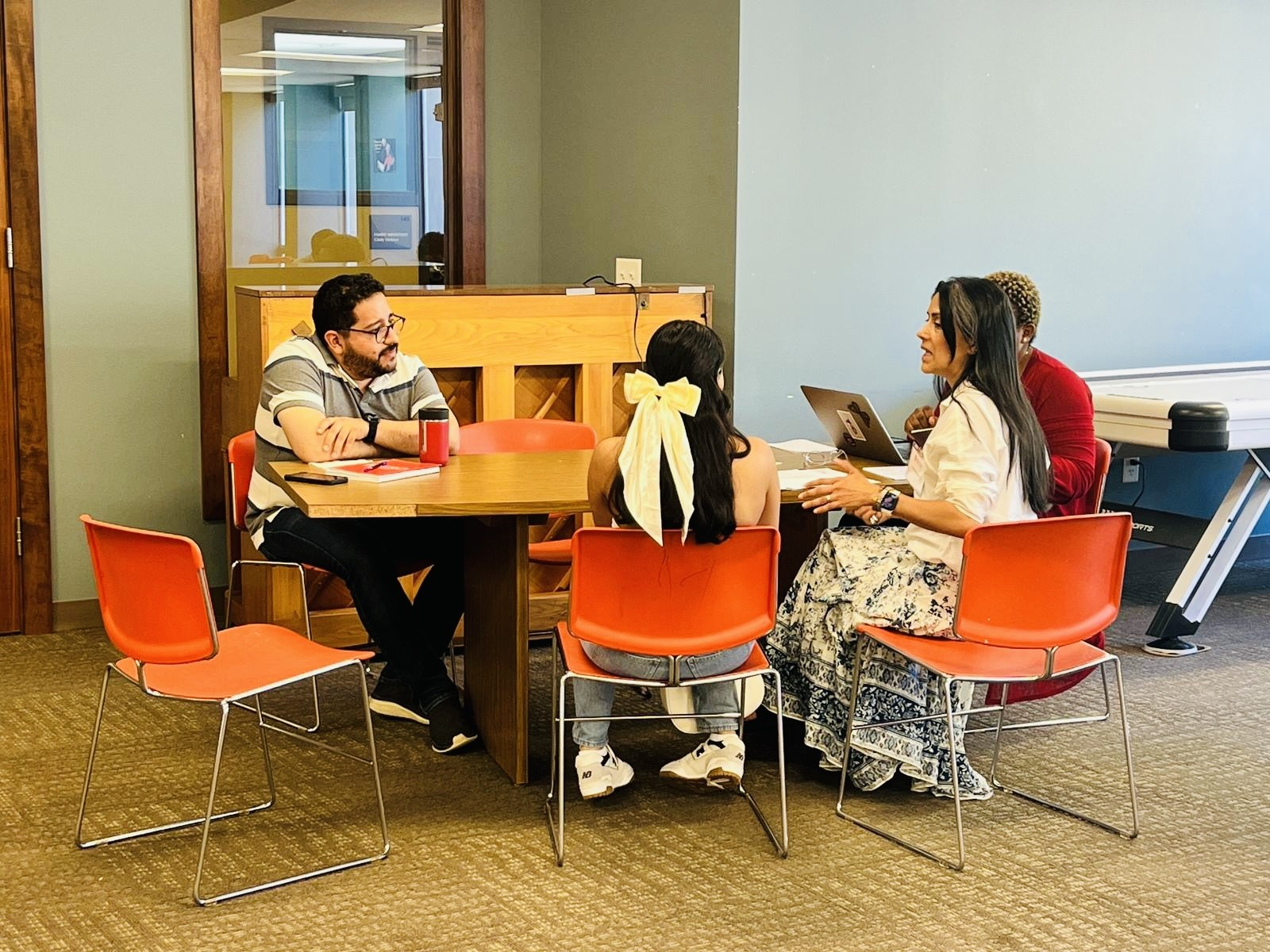
As an affiliate faculty with the Latin American Caribbean, and Iberian department and communications arts professor, McKinnon was hearing from a number of students who were curious about immigration law but weren’t sure how to get involved. She thought a community-based learning (CBL) course that provided CILC dependable, Spanish-speaking volunteers and exposed students to immigration law would help address both needs.
“This just felt like an organic combination,” she says. “I pitched the idea to the folks at the Morgridge Center [for Public Service] and they liked it.”
McKinnon applied for a community-based learning (CBL) course designation through the Morgridge Center. In spring 2025, Latin American, Caribbean, and Iberian Studies (LACIS) 440: Applying Spanish Language Skills at an Immigration Law Clinic was officially a CBL course.
During the semester, students meet in person three times in the first month, and once per month for the remainder. McKinnon’s role is to provide a space for students to learn about U.S. immigration law, teach students how to do translation and interpretation services in an immigration clinic setting and facilitate reflections on students’ experiences.
Students, on the other hand, are on the ground at CILC every week, totaling around 30 hours per semester. Generally, they provide interpretation services, facilitate intakes in Spanish and translate legal documents from Spanish to English. If the CILC staff identifies another community need though, the students adapt to whatever they’re called on to help with.
Natalia Lucak, a supervising attorney at CILC, explains that due to the size of their staff, CILC cannot ethically represent everyone who needs it. LACIS students help with a lot of work behind the scenes, ensuring that CILC’s professional staff can focus on helping as many clients as possible.
“We appreciate the volunteers,” Lucak says. “It’s nice to have repeat volunteers because once we train someone, they get better each time they do it. By the end of the semester we have a group of volunteers who are good at doing the intakes, and can help us in other various ways.”
Lilia Juarez, who graduated from UW–Madison in May 2026, took the class this past spring. Juarez, who is pursuing law school, joined the class because it was a perfect fit for her academic and career aspirations — but its impact went beyond her academic path.
“It was amazing. The class was mostly based on volunteering for the clinic, learning how you can approach somebody in a sensitive situation, how not to spread classified and personal information, and legal terms that sometimes I couldn’t translate,” says Juarez. “Doing that made me open my eyes and see the outside world instead of the academic world.”
Though the class was emotionally intense at times, Jurarez says that McKinnon and Lucak consistently communicated their support, encouraging students to ask questions when needed and to talk to them if they needed to vent or take a break. On the other side of the emotional weight; however, was an impact that Juarez felt personally.
“The best part was working with the community overall, having the opportunity to feel like you’re helping them and getting new experiences,” says Juarez.
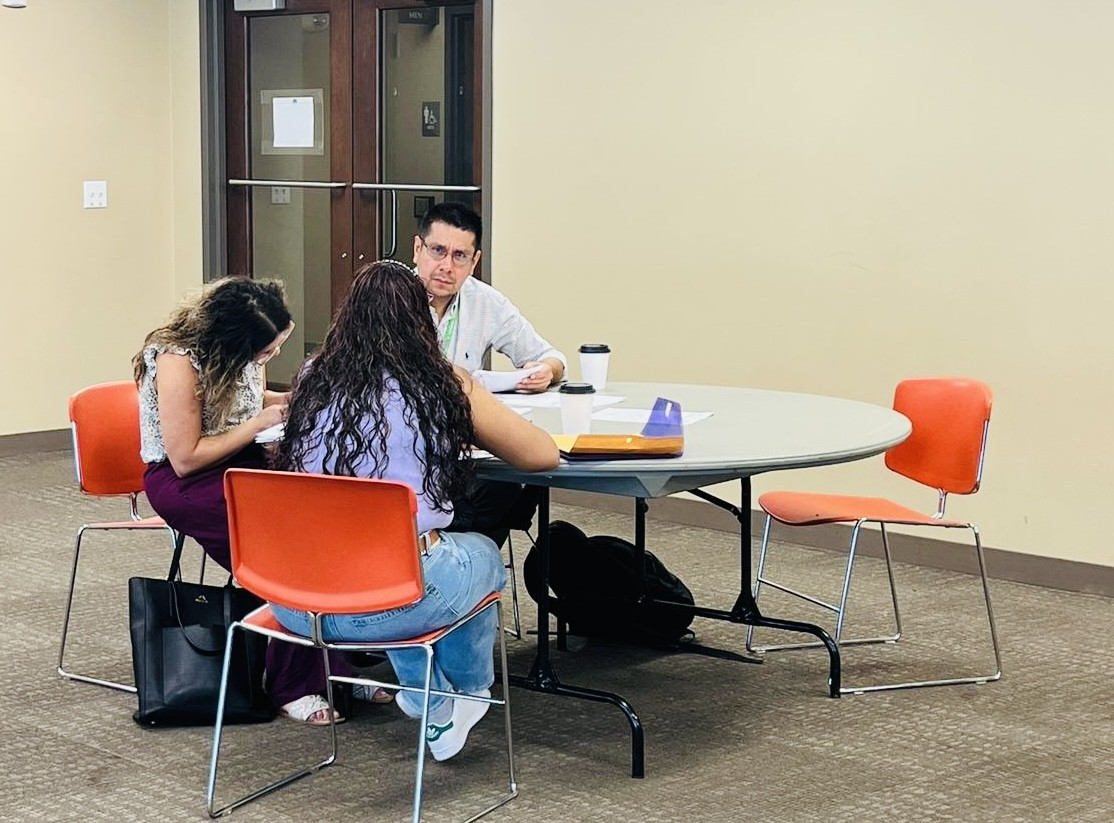
In 2025, CILC’s primary need was translation and interpretation services for pro se asylum cases, but their needs are constantly changing as community needs often do. This year, Lucak says that the community needs changed, and so did CILC’s services.
“As an organization we want to be responsive to the need, and right now there are fewer people who need asylum applications, but there are more people who need detainee intakes, and so we want to go where the need is,” says Lucak.
Immigration law has changed dramatically since the start of 2025. Lucak says that fewer people are being granted asylum, and the need has shifted to rapid response networks for immigrants detained by U.S. Immigration and Customs Enforcement.
Adapting to the community’s needs, CILC launched its Rapid Response Intake Clinics (RRICs). At these clinics, CILC volunteers collect information from friends or family of detained immigrants who have ties to Wisconsin. That information allows CILC attorneys to prepare for the consultation with the detained person and allows the attorney to provide more detailed and specific information.
This summer, Lucak reached out to McKinnon, thinking the RRICs would be a good environment for the students to participate in. McKinnon enthusiastically agreed, and so far this semester her students have been volunteering at the clinics.
“It can be challenging to schedule a call with immigrants detained in detention facilities… Some will only give you 30 minutes to speak to the person,” Lucak says. “Students have been helping make those calls really efficient… we get as much information as possible beforehand so the attorney can review it beforehand and provide more legal advice.”

Despite consistent changes to immigration law, CILC continues to adapt to help immigrants in need of legal counsel throughout Wisconsin. And as the partnership continues between McKinnon’s class and CILC, students will continue to show up, learning from the lived experiences of immigrants in ways that deepen their academic learning and future professional practice, and adapting to the community’s shifting needs in an ever-changing legal landscape.