2026-27 Wisconsin Idea Fellowships Awarded to Nine Projects
By Xai Xiong l April 23, 2026
The 2026-27 Wisconsin Idea Fellowships have been awarded to nine outstanding undergraduate projects at home and across the globe.
The projects, which are all rooted in the concept of addressing needs identified by community partners, range in topics from promoting physical wellbeing, sustainable cultural innovations, literacy initiatives and more. A total of 12 UW–Madison undergraduate students are part of this year’s projects, sponsored by the Morgridge Center for Public Service.
Wisconsin Idea Fellowships (WIF) are awarded annually to UW–Madison undergraduate projects working to address issues identified by local or global communities. Fellowships are awarded to semester- or year-long projects designed by an undergraduate student or group of students in collaboration with a comm unity organization and a UW faculty or staff member.
Projects receive both logistical support as well as financial support — up to $7,000 in total depending on project scope and duration. A portion of each project’s funding is awarded to students as a personal stipend, allowing them to pursue a WIF project using time they might have otherwise worked a job. Some projects will begin this summer, and some will last through next May.
1. Nuestras Voces Digitales (Our Digital Voices): Digital Literacy and Civic Empowerment for Ecuadorian Youth
Students: Angeline Morgado, Keyla Pillacela, Kristhel Vernaza Sanchez
Academic Advisor: Dr. Andrene Wright-Johnson, African American Studies
Community Partners: Red de Organizaciones por la Defensa de Derechos de Niñez y Adolescencia and Ayawana Foundation (Guayaquil and Guayas, Ecuador)
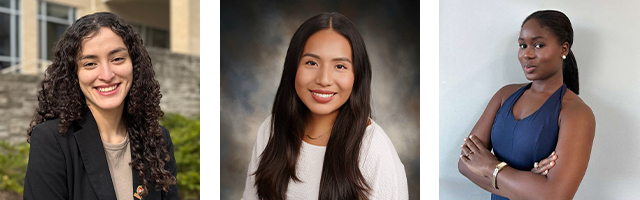
Nuestras Voces Digitales was born out of a community needs assessment that identified the urgent need for intervention in the digital sphere where young people are increasingly exposed to disinformation, radicalization, and polarization. In Ecuador, where 83.7% of the population have internet access, and 74% have at least one social media account, digital environments become spaces where young people do not merely observe the world — they interpret it, recreate it, and, with the right incentives, transform it positively. However, the same technology that offers new opportunities for participation can also reproduce and amplify structural inequities, discrimination, and violence. The community assessment identified that young Ecuadorians are keen to learn good practices and accessing resources to stay safe online, and that they recognize social media as a space to organize and speak up against injustice. This project aims to strengthen the digital capabilities of Ecuadorian youngsters through hands-on workshops on digital literacy as a tool for civic engagement so they can understand how digital dynamics operate, exercise their voices critically and responsibly as advocates, and conscientiously create content that promotes peace, digital citizenship, and addresses their community issues.
2. Pathways to Communication Careers: Expanding Access for Underrepresented Youth
Students: Payton Eilers and Leela Hart
Academic Advisor: Mianisha Finney, PhD CCC-SLP, Communication Sciences & Disorders
Community Partner: Boys & Girls Clubs of Dane County (Madison, WI)
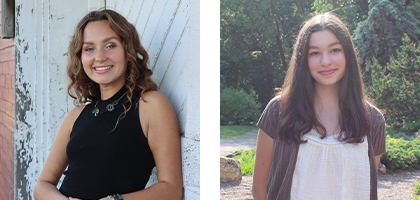
The communication sciences & disorders (CS&D) workforce remains overwhelmingly white and monolingual, limiting access to equitable and culturally responsive services for many communities. Recent research shows that students from underrepresented backgrounds have limited exposure to these careers and face structural barriers to entering the field, resulting in a workforce that does not reflect the populations it serves. Through a long-standing, five-year partnership between UW–Madison’s National Student Speech Language Hearing Association’s Wisconsin Idea Task Force and the Boys & Girls Clubs of Dane County, this project offers immersive programming, including high school presentations, campus visits, clinical shadowing, research lab tours, and a paid summer internship. The ongoing goals are to diversify the CS&D pipeline, strengthen students’ academic and professional skills, and foster belonging among youth who may not otherwise encounter this field. By providing local high school students with these experiences, this project aims to help develop a future workforce whose identities, languages, and lived experiences more closely align with the diverse communities we serve.
3. Healthy Women, Healthy Communities: Training Community Health Coaches in Rural Kenya
Student: Jess Randall
Academic Advisor: Sweta Shrestha, MPH, School of Medicine and Public Health
Community Partner: The Nikubuke Project, NGO (Lunga-Lunga, Kenya)

This project is a community-driven health education initiative developed in partnership with the Nikumbuke Project, a grassroots women’s health organization in rural Kenya. This project responds to a community-identified need for health coach training, leadership development, and sustainable teaching materials. This project strengthens Nikumbuke’s existing train-the-trainer model through the creation of 23 training books that combine health education content, leadership strategies, and participatory teaching methods for low-resource settings. It’s informed by literature on community-led health education, women’s leadership in health, and the train-the-trainer approach, emphasizing sustainability, peer-to-peer learning, and local ownership. The goal of this project is to strengthen the capacity, confidence, and sustainability of community health education in rural Kenya by investing in women leaders as educators. By supporting locally-led health education, this project contributes to Nikumbuke’s broader efforts to advance health equity, reduce structural barriers, and empower women across communities.
4. Roots of Responsibility
Student: Shane Funmaker
Academic Advisor: Dr. Reynaldo Morales, Education Policy Studies
Community Partner: Cloud Legacies, Inc (Baraboo, WI)
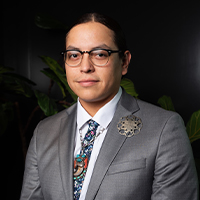
The Roots of Responsibility project is a community-based Traditional Ecological Knowledge (TEK) and Sustainability initiative based on a framework that can be implemented across Indian Country. TEK has suffered erasure through the termination, removal, and assimilationist polices being enacted on the Indigenous people. Once lush and ripe with food, nature is now poisoned and covered in commercial farms that are not nourishing the people who inhabit it. It is clear and undeniable that the current practices are not sustainable, and there is a scientific consensus. This research is led through interviews with community knowledge keepers and elders, supplementing the curriculum research with existing literature on Indigenous pedagogies. By implementing a culture camp based around a traditional village, this project will create an immersive experience, ensuring the transfer of intergenerational traditional education. While the physical camp would last three days, community meal workshops would continue through the winter and spring. The camp will include all Indigenous communities within Wisconsin and non-indigenous community members, ensuring the mission of creating inter-community relationships.
5. Freedom is Wellness: Health in a Freedom School Model
Student: Micah Sagers
Academic Advisor: Dr. Jessica Lee Stovall, African American Studies
Community Partner: Perry Family Free Clinic (Madison, WI)

Black communities in the United States experience persistent health disparities rooted in structural racism and oppression with particularly severe inequities observed among Black residents of Wisconsin. Black and other communities of color are disproportionately exposed to housing instability, food insecurity, limited access to healthcare, and environmental hazards that collectively harm physical, mental, and emotional wellbeing. These conditions underscore the need for community-centered approaches to health equity. “Freedom is Wellness” is embedded within the development of the SoulFolk Saturday School, a Freedom School-inspired research project launching in spring 2027, designed by Dr. Jessica Lee Stovall and the SoulFolk Collective at UW–Madison’s African American Studies Department. The SoulFolk Saturday School will serve Black high school students in the Madison Metropolitan School District (MMSD) through weekly Saturday sessions. This project will contribute to the school’s design and implementation with an emphasis on students’ social, emotional, and physical wellness. Partnering with the Perry Family Free Clinic in Madison to support community-informed health programming and connect uninsured students and their families to free healthcare services. In particular, this project will study the potential of Freedom Schools for positively impacting the health and wellbeing of Black youth.
6. Tech’Up Jeunes Initiative
Student: Grace Onesime Zongo
Academic Advisor: Mark C. Allie, Electrical and Computer Engineering
Community Partner: Leading Change Africa (Ouagadougou, Burkina Faso)
In Burkina Faso, high school students learning electronics are hindered by a critical lack of practical, hands-on training, and accessible electronic components. Despite a strong spirit of innovation often demonstrated through resourceful recycling of broken electronics in landfills, students are primarily limited to theoretical study, leading to a significant technology gap between knowledge and application. This persistent imbalance is driven by a broader lack of educational resources and infrastructure necessary for practical Science, Technology, Engineering, and Mathematics (STEM) skill development. This project will begin with a session focusing on leadership and community needs assessment to ensure students design focus on solving an identified community need. The students will then transition to the small FabLab put in place at the Leading Change Africa training center for hands-on curriculum in electronics and programing. This study hopes to design a strategy to build essential electronics competencies and connect the trainees to local university mentors. Anticipated outcomes include the establishment of a sustainable practical curriculum for high school students and the creation of STEM clubs in High schools.
7. From Silence to Strength: Building Lifelong Health Literacy for Women in Rural Nepal
Student: Aayana Roy
Academic Advisor: Dr. Anna Bishop Courtier, WISCIENCE
Community Partner: Shri Rashtriya Mahavidyalaya School, Sirsiya (Madhesh Pradesh, Nepal)

This project will co-design and deliver six culturally responsive health literacy workshops for women of all ages in Sirsiya village, Nepal, in partnership with Shri Rashtriya Mahavidyalaya School and local community stakeholders. This work responds to ongoing health inequities faced by women in Sirsiya, a Maithili-speaking community in Nepal’s rural Terai region, where low health literacy, delayed care-seeking and limited awareness of government programs contribute to preventable conditions such as anemia, untreated reproductive health issues and delayed emergency response. Each workshop will combine interactive learning, hands-on skill-building and the distribution of reusable menstrual hygiene and first-aid kits. A central component of the project is training existing female teachers to serve as facilitators, building long-term capacity within the school to continue the workshops annually beyond the fellowship period. The project will also translate essential health information into Maithili and adapt materials for low-literacy audiences to ensure they are accessible and relevant. Cultural norms, restricted mobility, and language barriers further limit access to care. Interviews with local physicians, school leaders and community advisors identified key needs, including menstrual and reproductive health education, early recognition of health risks, basic first-aid skills and improved awareness of available health and social support programs. Project outcomes will be evaluated through surveys, skills demonstrations and participant feedback to assess learning and guide future improvements.
8. Learning Beyond Housing Instability: A Community-Based Supplementary Education Program
Student: Riley Erben
Academic Advisor: Dr. Travis Wright, Counseling Psychology
Community Partner: Transition Education Program (Madison, WI)

The number of youth experiencing homelessness in the Madison Metropolitan School District continues to rise. Children who are currently experiencing homelessness — or have experienced it in the past — demonstrate significantly lower rates of academic achievement. These disparities reflect not only gaps in access to material resources but also the cumulative impact of instability on learning and engagement. The Transition Education Program (TEP), a unit within the Madison Metropolitan School District, supports students and their families by providing essential resources, including clothing, hygiene items, transportation, and school supplies. This project seeks to design and provide accessible academic enrichment activities that can be integrated into the materials TEP already distributes. These activities will be intentionally designed to be low-cost, flexible, and responsive to the realities of housing instability. By embedding enrichment into existing resource pathways, this project aims to promote meaningful learning experiences while strengthening opportunities for family engagement. Ultimately, this work is intended to support academic continuity and foster more equitable educational outcomes for students experiencing homelessness.
9. Soul Circles: Improving Postpartum Social Connectedness, Nutrition, and Well-Being
Student: Katherine Mastorides
Academic Advisor: Dr. Kathleen Hipke, Psychiatry
Community Partner: A Bowl of Soul / REAP Food Group (Madison, WI)
Wisconsin has the highest rate of Black infant mortality in the nation, and Black women experience maternal mortality at five times the rate of white women. In Dane County, this contributes to the lowest life expectancy of any group. Research shows that the postpartum period carries the greatest risk for maternal health complications, social isolation, and mortality, with suicide and drug overdose among the leading causes of death. Up to 80% of pregnancy-related deaths are preventable through improvements in social determinants of health, including nutrition, yet Black communities experience disproportionately high rates of food insecurity. Dane County lacks comprehensive, culturally responsive prenatal services — particularly those centered on holistic healing and offered in the postpartum period. A Bowl of Soul (ABOS) is the county’s only postpartum doula meal support program. Soul Circles will expand ABOS’s impact through community gatherings and educational programming that fosters connection, shared learning, and resource access. Project goals include reducing postpartum isolation, strengthening social support networks, improving maternal health and nutrition, and increasing awareness of postpartum challenges.